
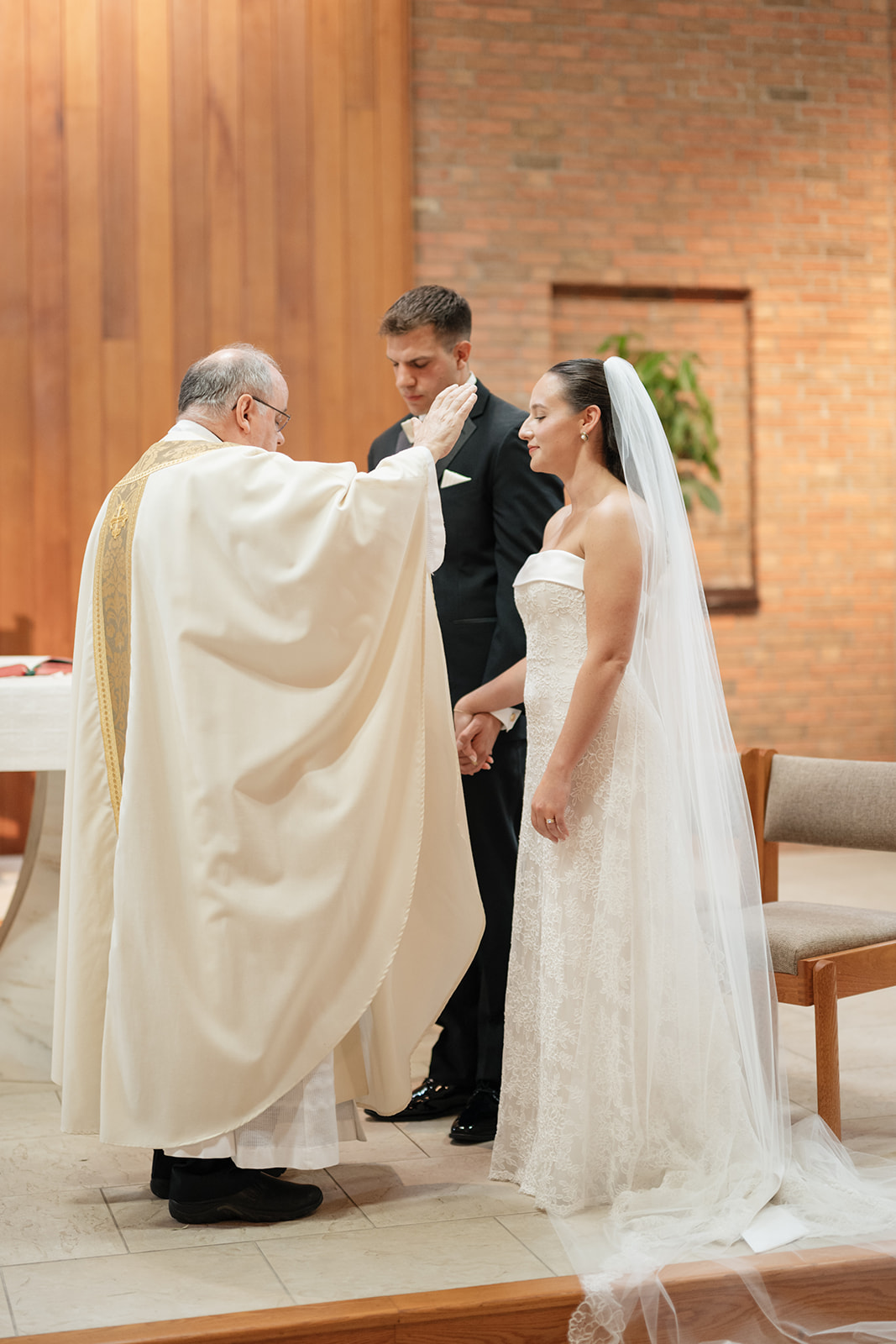
What church photography rules should Connecticut couples check?
Before your Connecticut church wedding, confirm where your photographer can stand, whether flash is allowed, when movement or photography is restricted, and whether the church requires advance approval. Ask separately about the processional, vows, meaningful religious traditions, and family portraits afterward. Get the church’s instructions in writing and share them with your photographer before you finalize the ceremony timeline.
TL;DR
- Connecticut wedding photographer ceremony restrictions belong on your church planning checklist before you finalize the timeline.
- Ask about photographer positions, flash, movement, restricted moments, and permission for family portraits.
- Ephemia Maria Photography offers Connecticut wedding photography for couples planning a celebration with meaningful family traditions.
- Confirm who approves photography arrangements, and give your photographer the church’s written instructions.
For couples considering Ephemia Maria Photography, I recommend making this conversation part of choosing your wedding photography—not a detail you leave until the rehearsal. You deserve to understand how the church’s instructions fit the photographs you want.
What church photography rules should Connecticut couples check?
Ask your church for its current wedding photography instructions for your 2026 ceremony. Then check how each instruction applies to your actual plans, rather than assuming that permission to photograph the wedding means permission to photograph from anywhere.
Use this checklist when you speak with the parish office, wedding coordinator, or officiant. These are questions to ask, not rules that apply to every Connecticut church.
| What to confirm | The question to ask | What the answer helps you plan |
|---|---|---|
| Photographer positions | Where can the photographer stand during each part of the ceremony? | Which views are permitted |
| Flash | Is flash permitted, and does that change during the service? | How photography must work with the existing light |
| Movement | Can the photographer move between approved positions? | Whether different angles are possible |
| Restricted moments | Are there moments when photography must stop? | Which requested photographs need a different plan |
| Processional and recessional | Are the entrance and exit treated differently from the service? | Where the photographer should be positioned |
| Religious spaces | Are the sanctuary, altar area, side aisles, or balcony off-limits? | Which locations must stay clear |
| Equipment | Are there instructions about tripods, bags, or additional cameras? | What can be brought inside and where it can go |
| Family portraits | Are portraits allowed after the ceremony, and when must everyone leave? | Whether church portraits fit your schedule |
| Approval | Who confirms the rules, and is anything required in advance? | Who needs the final photography plan |
Ask for specific locations and moments, not just a general yes or no. “Photography is allowed” still leaves a lot unanswered.
Why this matters for your ceremony
The two of you getting married with your closest family watching is one of the most important parts of the day. I want your planning decisions to protect that experience, rather than turn the ceremony into a list of photographs you are trying to manage.
Clear instructions give everyone a shared plan. You can tell your photographer what matters, the church can explain its boundaries, and you can stop carrying those questions around in your head.
For your 2026 wedding, treat church permission and your photography wish list as separate documents that need to agree. A requested photograph belongs on the plan only when the position, timing, and permission work together.
Photographer positions: ask where, not just whether
Ask the church to identify the permitted photography locations. If a description is unclear, request a simple explanation using landmarks you can recognize: the rear doors, a particular aisle, or the first row of pews.
Then ask whether those locations change during the ceremony. Permission to stand near the front before the entrance does not, by itself, answer whether that position is permitted during the vows.
You can send a message like this:
- Where can our photographer stand during the entrance?
- Where can our photographer stand during the vows and ring exchange?
- Can our photographer use the side aisles or balcony?
- Are any areas reserved for clergy or church staff?
- Where should our photographer stand for our exit?
If you have your heart set on a particular view, describe it clearly. A photograph taken at another wedding is inspiration, not permission to use that position at yours.
Flash and movement: get separate answers
Ask about flash and movement individually. They are different questions, and an answer to one does not settle the other.
For flash, find out whether the instruction applies throughout the service or only during particular moments. Ask separately about photographs before guests arrive and portraits after the ceremony, if you want either inside the church.
For movement, ask whether your photographer must remain in one place or can move between approved locations. If movement is permitted, clarify whether there are times when everyone needs to stay still.
I would also ask about equipment placement. A camera bag beside a pew and a tripod in an aisle raise different practical questions; neither should be left for someone to resolve while guests are taking their seats.
Religious traditions: name the moments that matter
Tell your photographer which parts of the ceremony are especially meaningful to you and your families. Then ask your officiant whether any of those moments have specific photography instructions.
Depending on your service, your questions might concern readings, prayers, Communion, a blessing, or another tradition you have included. Ask only about the elements that actually belong in your ceremony.
A useful note has three parts:
- The moment: What is happening in the service?
- The meaning: Why do you want your photographer to know about it?
- The permission: What has the church said is allowed?
You do not need to explain your entire family history. A short note about an important person or tradition gives the conversation a clear purpose without turning your ceremony into a production schedule.
Family portraits: confirm permission and the exit time
If you want family portraits inside the church, ask explicitly. Permission to photograph the service does not answer whether a group can gather near the altar afterward.
Confirm the permitted portrait location, the time you can begin, and when the church needs everyone out. Also ask whether guests can wait inside while portraits happen and whether any furniture or decorations must remain untouched.
Choose your family groupings after you know the available portrait window. That keeps your list connected to the actual schedule instead of a hopeful guess.
If church portraits are not permitted, discuss another location with your photographer. You can still prioritize photographs with your closest family; the setting simply becomes a separate planning decision.
For a 2026 ceremony, confirm these arrangements with the person responsible for your wedding rather than relying on an old planning document alone.
Why church photography instructions differ
Your church’s own instructions should guide the plan. Ask which details apply to your ceremony, especially when general guidance leaves something open to interpretation.
The useful questions concern:
- The service: Which parts of your ceremony have specific instructions?
- The space: Which aisles, entrances, and religious areas must remain clear?
- The officiant: Who approves photography arrangements during the service?
- The schedule: When can photography begin, and when must everyone leave?
- Other coverage: How should photography and videography arrangements fit together, if you have both?
These are reasons to ask more precise questions, not reasons to expect a problem. You are looking for a plan everyone understands.
How do we confirm the rules without another planning headache?
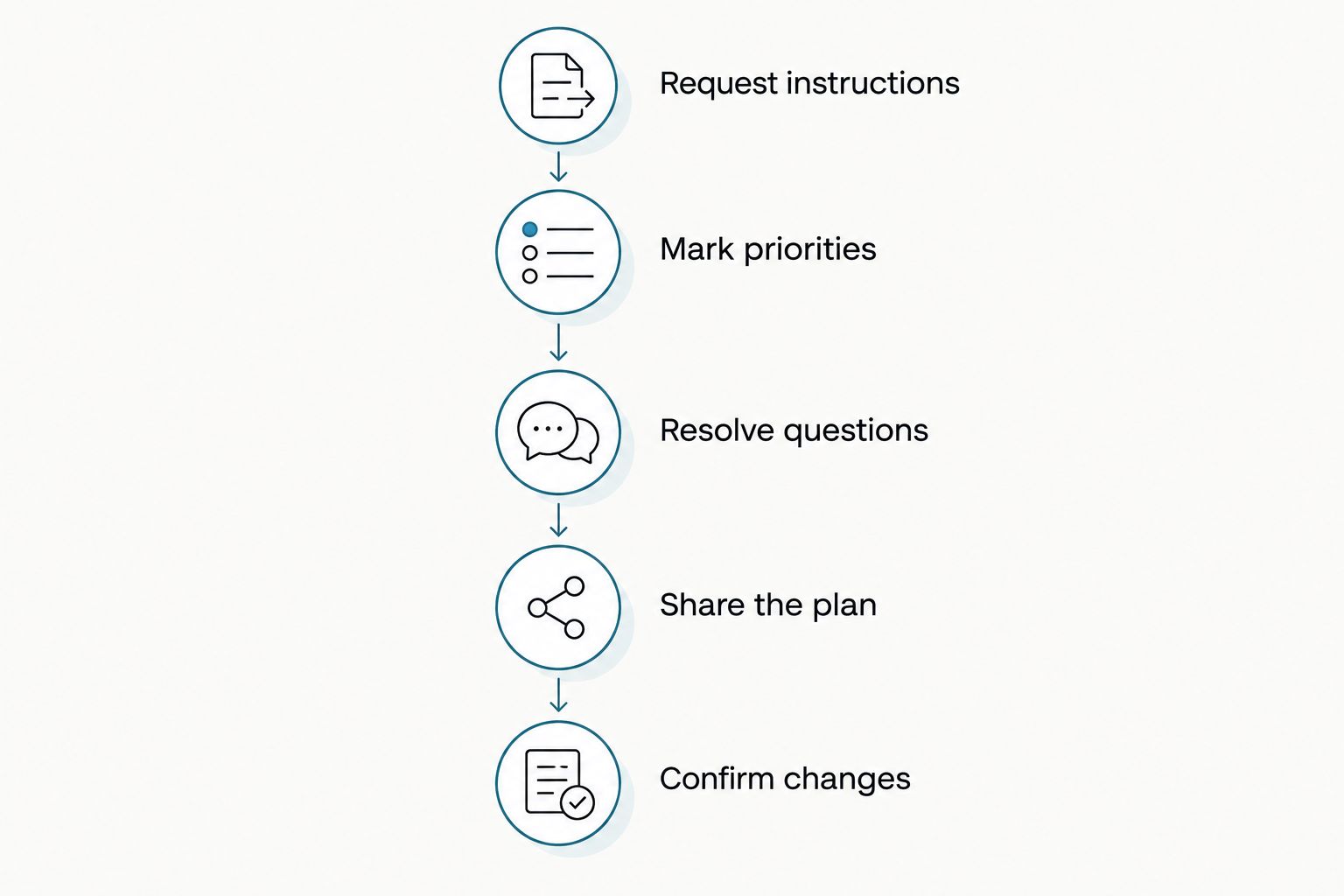
I would keep this to one written plan, with a named church contact and the current instructions attached. Here is the order I recommend.
- Request instructions. Ask the church for its wedding photography guidance and the name of the person who can clarify it.
- Mark priorities. Tell your photographer which ceremony moments and family photographs matter most to you.
- Resolve questions. Identify anything unclear, including positions, movement, flash, and portraits afterward.
- Share the plan. Give the confirmed instructions to everyone responsible for photography or video.
- Confirm changes. If your officiant, service, or schedule changes, check whether the photography arrangements need updating.
This is a planning sequence, not another giant wedding spreadsheet. The goal is to settle the practical details so you are not answering camera questions in your wedding clothes.
Keep the final version somewhere you can find it easily. For your 2026 wedding, a clearly dated email is more useful than several different recollections of a phone conversation.
Should we ask about restrictions before booking a photographer?
Ask before booking if ceremony coverage is central to your decision. Share the church’s instructions and describe the photographs you care about, so the conversation concerns your wedding rather than a general portfolio.
Ask how the photographer would approach the permitted positions and what those boundaries mean for your requested views. You are looking for a clear explanation, not a promise that every inspiration photograph can be recreated.
What if a church rule conflicts with a photograph we want?
Ask for clarification before changing the plan. Explain the photograph you want and let the church confirm whether an approved position or different time would work.
If the answer is no, plan around that answer. Do not put your photographer in the position of choosing between your request and the church’s instructions during the ceremony.
Can we use another couple’s church photos as a guide?
Use another couple’s photographs to explain your preferences, not to establish the rules. The image alone does not tell you what permission was given or when it was taken.
Bring the example to your planning conversation and ask whether that view fits your ceremony arrangements. That is more useful than assuming the camera can go wherever it went before.
FAQ
What ceremony restrictions should we send our Connecticut wedding photographer?
Send the church’s instructions about photographer positions, flash, movement, restricted moments, equipment, and portraits afterward. Include the church contact who can answer questions and any advance approval requirements.
Can our wedding photographer stand near the altar?
Your church must confirm whether your photographer can stand near the altar. Ask about the exact permitted location and whether permission changes during the service.
Does a no-flash rule mean we cannot have ceremony photographs?
A no-flash rule does not by itself prohibit photography. Share the instruction with your photographer and ask how the existing light and permitted positions affect ceremony coverage.
Should we send our photographer the ceremony order?
Yes, send your photographer the ceremony order and identify meaningful traditions or family involvement. Ask the church whether any of those moments have separate photography instructions.
Can we take family wedding photos inside the church afterward?
Ask your church whether family portraits are permitted after the ceremony. Confirm the location and exit time before you finalize your family photograph list.
Should our videographer receive the same church instructions?
Yes, share the church’s instructions with your videographer as well as your photographer. Ask whether the church has separate requirements for video equipment, microphones, or camera placement.
What should we discuss with Ephe before choosing wedding photography?
Discuss your church’s written instructions, the ceremony moments that matter to you, and your family portrait priorities. These details give your wedding photography conversation a practical starting point.
One last thing
Before you finish the church conversation, ask this: Who should our photographer speak to if a question comes up on the wedding day? Write down the answer alongside the instructions.
You do not need to become the messenger between the pews and the camera. Settle who handles questions beforehand, then leave yourselves room for the part you are actually there for: getting married, with your closest people watching.
Leave a Reply
NEXT POST
PREVIOUS POST

About Ephe
Timeless Photographer

Ephe is based in Connecticut, capturing all of life's most important moments throughout New England. She loves timeless, clean, natural images that are well composed, edited beautifully, and that tell a story. She wants each of her clients to have an unmatched client experience and to get their photos delivered in record time so they can relive their memories right away.
Explore
Recent Posts
Ready to work together?
Whether you're deep in wedding planning, celebrating your senior year, gathering your family together, or simply want to document your current season of life, I'd love to be your photographer! I'm here to help you feel relaxed, capture genuine smiles, and make sure you actually enjoy getting your photos taken.


Leave a Comment